
Training vital to raising efficiency and effectiveness – Amb. Leonard N Iipumbu
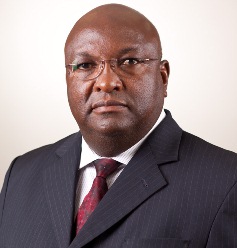
I am delighted to welcome you all to the first CEO Colloquium of the SADC Development Finance Institution Network convened by the SADC DFRC. This is an advanced Management Development Programme directed at us as Chief Executive Office of the Network with the purpose of giving us an opportunity to discuss strategies and policy issues of development finance with experts in the field in as far as they relate to our institutions, and to carry out an introspection of how they are working to meet stakeholder interests at the institutional and personal level.
As is apparent from the establishment of the Network and its DFRC, and their successful and commendable operation over the last ten years or so, training and development of management and staff is vital to raising the efficiency and effectiveness of an organization, and enabling it to meet its organizational mandates.
I am pleased to note that a lot of our members of staff have, over the years, attended DFRC training programmes in both technical and support areas for the DFIs, and have, I believe as a consequence contributed significantly to boosting the operations of our respective institutions. While I applaud this success, I caution against complacency. Rather I emphasise the need for a renewed and sustained drive for innovative capacity building at all levels of our institutions to fine-tune our skills further. The world is changing, technology in leaps and bounds, clients are becoming more demanding, and development imperatives ever more pressing.
Let us all welcome the decision to convene this programme, because even as CEOs, we need to continually sharpen our knowledge and skills to understand our environment and the internal workings of our organizations. Our environments are continually changing and turbulent, and stakeholders (government, board, financers, etc) interests loom large and may shift from time to time. At the same time, we must steer our teams of skilled and knowledgeable and dynamic management and staff to deliver on mandate and strategy.
It is therefore important that we as Heads of our organizations pause to reflect from time to time on what we are doing and whether we can do it better. We may need revisit our understanding of strategy formulation, improve on financial management skills, re-engineer our corporate governance and citizenship strategies on human relation approach may need reflection. We should also set a clear example to our staff that training and development is a continuous exercise for all levels of the organization, and that whatever we are doing today, we can do better tomorrow.

It is also important that we also set the direction, and provide guidance to the DFRC in the future approaches to management development at the level of the CEOs so that such colloquium can be increasingly effective in meeting our needs. We should also identify management capacity gaps, which the DFRC can help in addressing at senior and middle management levels in the future. A strong well-framed management team is vital to the successful translation of high level strategy to effective service delivery to our clients and stakeholders.
I therefore once again, welcome all of you colleagues to this brief but intense gathering of peers and leaders of DFIs in the region and look forward to the yields dividends for us.
May I conclude by extending a word of thanks and appreciated to Mr Kufeni and his team at DFRC Head Office for being hard at work in putting this colloquium program together for us to meet as DFIs peers to exchange views and network on important issues of interest to our institutions.
I wish you all an enjoyable stay, and a productive engagement for the next two days.
I thank you


