
Getting the private sector involved in infrastructure development in SADC
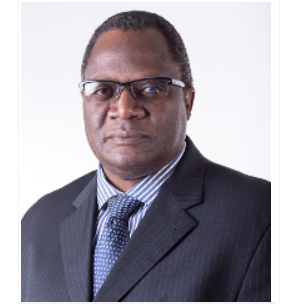
Mr. Stuart Kufeni, the Chief Executive Officer of the Southern African Development Community – Developement Finance Resouce Centre (SADC-DFRC), was interviewed by Kate Douglas on the ocassion of the Public Private Partnership Forum held in Johannesburg, South Africa in October 2013 on the role of the Private Sector in Infrastracture development. The article was published under “How we made it in Africa”, Read More.
Africa’s infrastructure problem has been the root of many challenges for businesses on the continent. Inadequate roads, ports and railway networks have considerably raised the cost of transportation and trade on the continent. A lack of ICT and power infrastructure has meant Africa has some of the most expensive and unreliable internet and electricity costs in the world. These obstacles have been a hindrance to Africa’s potential and opportunities for foreign business and investment.
However, one way that the private sector can get involved in the development of this necessary infrastructure is through public-private partnerships.
Towards the end of last month, the first public-private partnership (PPP) forum for infrastructure in Southern Africa was held, launched by the Southern African Development Community (SADC) Public-Private Partnership Network and New Partnership for Africa’s Development (NEPAD) Business Foundation.
According to Stuart Kufeni, CEO of SADC Development Finance Resource Centre (DFRC) which houses the Public-Private Partnership Network, Africa needs the private sector to fund the SADC’s investment in infrastructure.
“Most of these infrastructure projects are huge and our governments can’t raise that kind of money in total so they need the private sector participation in those projects. For instance, like now from 2013 to 2017, we are looking at projects in the region of US$65bn for infrastructure alone,” Kufeni told How we made it in Africa. “There is no way our governments can raise that much.”
In the region only two countries, South Africa and Mauritius, are mature in terms of the use of PPPs, and – according to Kufeni – the DFRC looks to promote and facilitate the use of PPPs in the 15 SADC countries.
“This means that our countries must have the capacity to identify and develop PPPs and engage the private sector for investment purposes,” he explained. “So we are capacitating our countries’ government and the other state-owned enterprises that are involved in investment as well as the Development Finance Institution. We also have to make sure that the regulatory framework within these countries promote PPPs and then, in addition to that, we need to make sure that there is also the necessary policy framework within which our PPPs can be implemented. So there is a lot to do on the ground to make sure that PPPs are successful and that is what our role is.”
In addition to funding, SADC governments also need the expertise and experience of the private sector to build and manage these infrastructure projects.
Risks versus rewards for the private sector
While Kufeni said there is indeed a degree of risk facing the private sector in these investments, it’s important that this risk is also shared by government so that the success of the PPP is a priority for both parties. “As the private sector, you have to get your returns,” he emphasised.


