
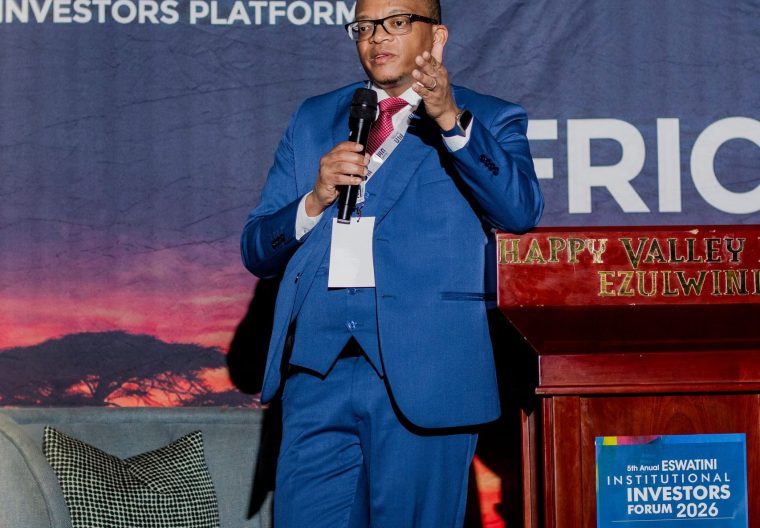
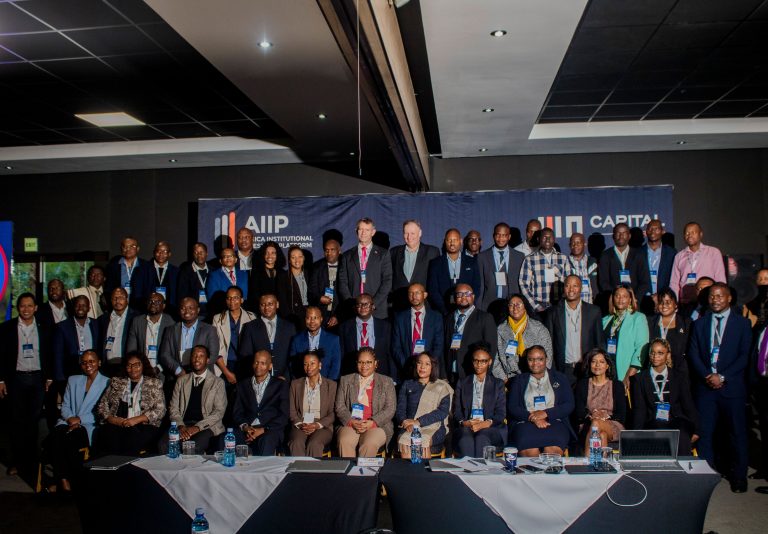
From Capital Pools To Investable Pipelines – 5th Annual Eswatini Institutional Investors Forum 2026
SADC Development Finance Resource Centre (SADC-DFRC) Executive Director, Mr Zwelibanzi Sapula, participated as a keynote speaker at the 5th Annual Eswatini Institutional Investors Forum, held on 27 and 28 August 2026 in the Kingdom of Eswatini.
In his address, Mr Sapula emphasised that Africa’s challenge is not simply a shortage of capital, but the difficulty of connecting available capital, at sufficient scale, to well-prepared and investable projects.
Africa’s institutional investors collectively hold approximately US$1.1 trillion in assets, including an estimated US$455 billion managed by pension funds. Unlocking even a small proportion of this capital could significantly advance infrastructure development, industrialisation and regional integration across SADC.
However, Mr Sapula cautioned that pension funds should not be regarded merely as sources of development finance. Their primary responsibility remains generating appropriate returns for their members. Infrastructure projects must therefore meet institutional investors’ requirements relating to risk, return, governance, scale and liquidity.
“𝐁𝐚𝐧𝐤𝐚𝐛𝐢𝐥𝐢𝐭𝐲 𝐢𝐬 𝐦𝐚𝐧𝐮𝐟𝐚𝐜𝐭𝐮𝐫𝐞𝐝,” Mr Sapula stressed.
Achieving bankability requires deliberate investment in feasibility studies, environmental assessments, engineering, revenue modelling, legal structuring, procurement and financial modelling. This is particularly important for “stranded” projects, where financiers may be prepared to fund construction once certain conditions are satisfied, but preparatory requirements such as land acquisition and environmental assessments remain unfunded.
Mr Sapula proposed a complementary financing model in which development finance institutions absorb early-stage risks through project preparation, long-term financing, guarantees and credit enhancement. Institutional investors, including pension funds, insurers and infrastructure funds, could then participate once projects become operational and present a more mature risk profile.
“𝐃𝐞𝐯𝐞𝐥𝐨𝐩𝐦𝐞𝐧𝐭 𝐜𝐚𝐩𝐢𝐭𝐚𝐥 𝐭𝐚𝐤𝐞𝐬 𝐞𝐚𝐫𝐥𝐲 𝐫𝐢𝐬𝐤. 𝐈𝐧𝐬𝐭𝐢𝐭𝐮𝐭𝐢𝐨𝐧𝐚𝐥 𝐜𝐚𝐩𝐢𝐭𝐚𝐥 𝐭𝐚𝐤𝐞𝐬 𝐦𝐚𝐭𝐮𝐫𝐞 𝐫𝐢𝐬𝐤.”
Under this approach, institutional investors could refinance operational assets, enabling DFIs to recycle their capital into new infrastructure projects.
Existing regional mechanisms provide a foundation for this work. These include the SADC Project Preparation and Development Facility, managed by the Development Bank of Southern Africa, and the SADC DFI Network, which connects 41 development finance institutions across 15 countries. The SADC-DFRC has also signed a Memorandum of Understanding with CISNA to advance regulatory harmonisation and strengthen engagement among regulators, project developers and institutional investors.
The priority is clear: SADC must move beyond project lists towards credible, investable pipelines and build an integrated financing architecture capable of mobilising institutional capital for the region’s infrastructure and development priorities.


